Language Courses Online in 2026: A Practical Guide for Learners in Pakistan
Language courses online have moved from a pandemic-era stopgap to the default way ambitious learners in Pakistan build fluency in 2026. Whether you are a university student targeting an IELTS band, a professional preparing for a Gulf posting, or a parent who wants your child to speak confident English, the internet now puts qualified instruction within reach of anyone with a phone and a stable connection. The challenge is no longer access. It is choosing the right program and sticking with it.
This guide draws on years of watching learners in Islamabad, Rawalpindi, and beyond succeed and stumble with digital study. It explains how modern language courses online actually work, what separates a serious program from a flashy app, and how to turn screen time into real conversational ability.
Why Language Courses Online Work So Well in 2026
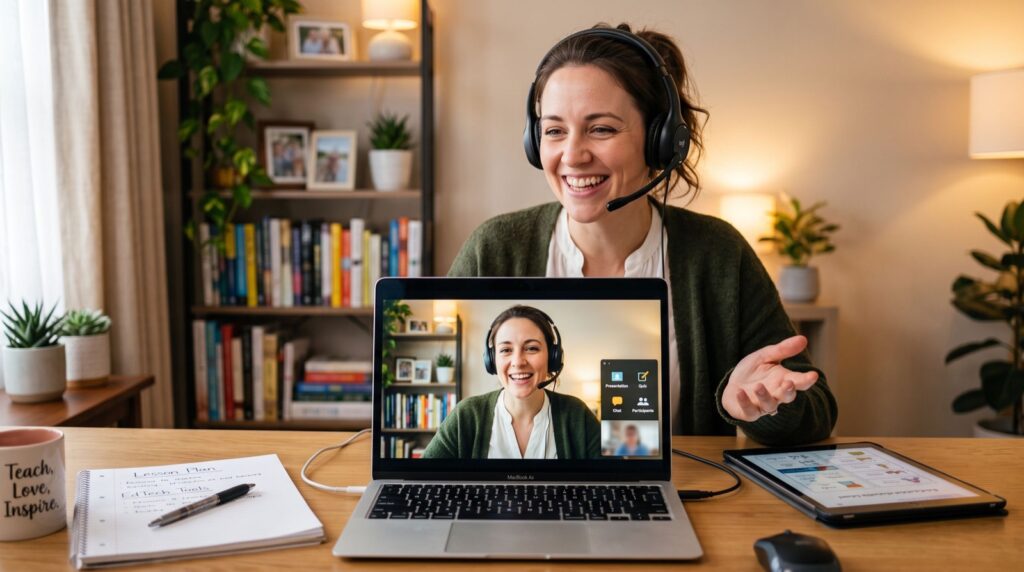
The biggest advantage is flexibility. You can attend a live session at 9 pm after work, replay a recorded grammar lesson on the bus, and message your tutor between classes. That rhythm fits the messy reality of most Pakistani households far better than a fixed evening academy slot across town.
Cost is the second draw. Without commuting, printed material, or physical classroom overheads, quality instruction becomes cheaper. A learner in a small town can now study with an instructor who once only served elite city neighbourhoods.
Finally, the technology matured. Video platforms, shared whiteboards, speech-recognition drills, and instant feedback tools make a well-run virtual class genuinely interactive rather than a passive lecture.
What the Research Says
Independent bodies back the shift. The British Council has expanded its own online English provision worldwide, and global education analysis from the OECD shows blended and fully online learning delivering outcomes on par with classroom study when instruction is well designed. Structure, not the medium, decides results.
Choosing Between Apps, Group Classes, and Private Tutors
Not every learner needs the same format. Self-paced apps suit vocabulary building and casual exposure. Live group classes add accountability and speaking practice at a moderate price. Private online tutoring delivers the fastest gains because every minute targets your specific weaknesses.
Many serious learners blend all three: an app for daily reps, a weekly group class for structure, and a private session before exams. When you want structured, teacher-led progress, well-designed language courses online give you a curriculum, assessment, and a real human to correct your pronunciation.
Comparing Your Main Options
| Format | Best for | Typical cost | Speaking practice |
|---|---|---|---|
| Self-paced app | Vocabulary, habit-building | Low / free | Minimal |
| Live group class | Structure, motivation | Moderate | Good |
| Private online tutor | Exam prep, fast fluency | Higher | Excellent |
| Blended program | Balanced long-term growth | Moderate–high | Excellent |
How to Evaluate a Provider Before You Pay
The online space is crowded, and marketing gloss can hide weak teaching. Before committing, run through a short checklist. Reputable programs happily answer every point, while weaker outfits dodge the specifics.
- Instructor credentials — ask about qualifications, teaching years, and accent training.
- Class size — smaller groups mean more speaking time for you.
- Curriculum — a clear level map (A1 to C1) beats random topic hopping.
- Trial lesson — a free or low-cost sample reveals the real teaching quality.
- Support — homework feedback and doubt-clearing outside class hours.
- Reviews — genuine learner testimonials, not just star ratings.
Comparing a shortlist of quality service providers the same way you would vet any professional service saves you months of wasted fees and frustration.
Do You Need a Local Tutor or a Global One?
For general conversation, a well-trained tutor anywhere works. But for exam coaching tied to the Pakistani context, local expertise helps. Instructors familiar with the FSc-to-university pipeline, common regional pronunciation habits, and the exact IELTS or O-Level rubric can shortcut your progress. Many families in the capital pair a global speaking partner with dedicated online tutors in Islamabad who understand the local curriculum and grading culture.
Building a Study Routine That Actually Sticks
Enrolment is easy. Consistency is where most learners fail. The learners who reach fluency treat their course like a standing appointment, not an optional extra.
Set a fixed weekly slot and protect it. Spend fifteen minutes daily on review between classes, because short frequent practice beats a single long weekend cram. Speak from day one, even badly, since waiting until you feel ready guarantees you never will. Record yourself monthly to hear real progress that day-to-day study hides.
One original tip from experienced tutors: keep a running “error diary.” Every time your teacher corrects you, log the mistake and revisit it weekly. This single habit compresses months of slow trial-and-error into a focused feedback loop.
Common Mistakes That Stall Progress
Even motivated learners sabotage themselves in predictable ways. The first is chasing perfection before speaking, which keeps the mouth silent while grammar rules pile up unused. Fluency grows from imperfect practice, not from waiting.
The second is app-hopping. Downloading a new tool every fortnight feels productive but resets your progress each time. Pick one credible program and give it a full three months before judging results.
The third is ignoring listening. Many learners drill vocabulary yet never train their ear, then freeze in real conversation. Balance reading and writing with daily listening to native audio, and your comprehension will climb alongside your speaking.
The fourth is skipping revision. New words fade fast without spaced repetition. Ten minutes revisiting last week’s material often teaches more than an hour of fresh content piled on a shaky base.
Frequently Asked Questions
How long do language courses online take to show results?
Most motivated learners notice clear conversational improvement within eight to twelve weeks of consistent study. Reaching a solid intermediate level typically takes six to nine months, depending on your starting point and daily practice time.
Are online language courses as effective as in-person classes?
Yes, when the program is well structured. Research from bodies like the OECD shows outcomes comparable to classroom study, provided you get live interaction, feedback, and regular speaking practice rather than passive video watching.
Can beginners with zero background start online?
Absolutely. Good providers offer true beginner (A1) tracks with visual aids, slow-paced audio, and patient instructors. Starting online is often less intimidating than a crowded physical classroom.
How much should I budget in 2026?
Costs vary widely. Self-paced apps can be free, group classes are affordable, and private tutoring costs more per hour but delivers faster results. A blended approach usually offers the best value for money.
The Bottom Line
Language courses online in 2026 give learners across Pakistan a genuine, affordable path to fluency that simply did not exist a decade ago. The medium is proven; your success now depends on choosing a credible provider, committing to a routine, and speaking early and often. Shortlist a few programs, take the trial lessons, and pick the one that gives you real teacher feedback. Start this week, stay consistent, and your future self will thank you for it.